
A memorable restaurant experience goes far beyond what is on the plate. From the first welcome to the final farewell, hospitality shapes how guests feel, connect, and remember their time at the table. This article explores the often-unseen details that transform good service into genuine hospitality, from reading the table and mastering pacing to creating comfort, building trust, and recovering gracefully when things go wrong.

A restaurant can serve an expertly prepared meal and still leave a guest unmoved.
The dining room may be beautiful, the ingredients exceptional, and every plate technically precise. Yet if the welcome feels indifferent, the pacing is awkward, or guests sense that their presence is an inconvenience, culinary excellence alone may not create a memorable experience.
Hospitality occupies the less visible side of dining. It appears in the greeting at the door, the confidence of a server explaining an unfamiliar ingredient, the pause between courses, the placement of a water glass, and the ability to recognize when a table wants conversation—or privacy. At its best, hospitality feels effortless precisely because so much thought has gone into it.
Restaurants are unusual businesses because they produce two things simultaneously: food and experience. The kitchen can control temperature, seasoning, and technique with considerable precision. Human interaction is less predictable. Every guest arrives with different expectations, personalities, needs, and reasons for being there.
The craft of hospitality lies in recognizing those differences while making each person feel genuinely welcome.
Hospitality and Service Are Not Quite the Same
Service is what a restaurant does for a guest. Hospitality is how the guest experiences it.
A server can deliver every course correctly, refill every beverage, and present the check without error. Those actions demonstrate competent service. Hospitality adds awareness: noticing that someone seems confused by the menu, recognizing that a celebration deserves acknowledgment without becoming intrusive, or slowing the pace when guests clearly want to linger.
This distinction helps explain why expensive restaurants do not possess a monopoly on exceptional hospitality.
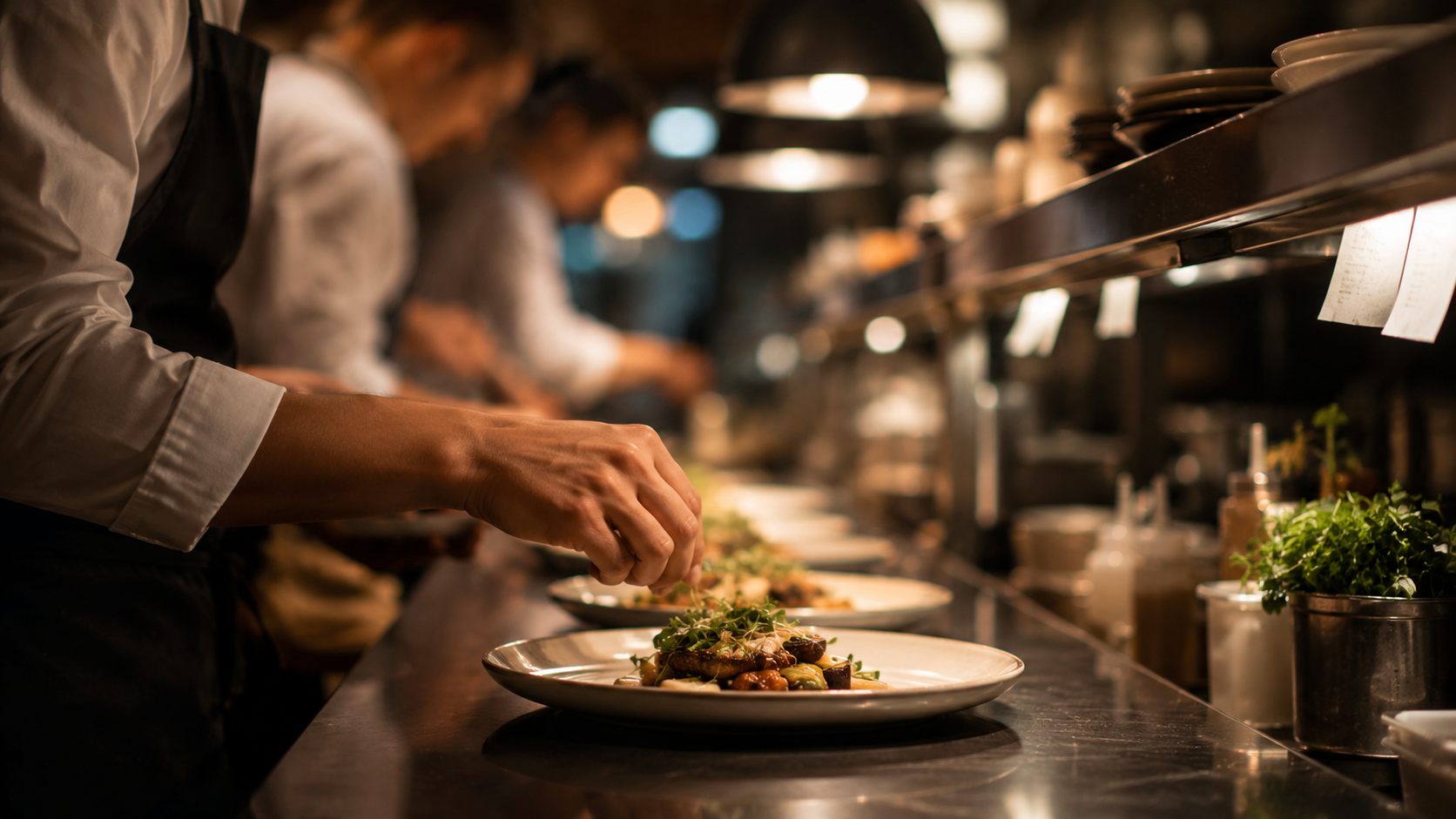
A neighborhood diner where a server remembers a regular guest’s coffee order can create it. So can a family-owned restaurant where the owner greets newcomers as warmly as longtime customers. Hospitality depends less on formality than on attention.
That attention communicates a simple message: the guest is not merely occupying a seat.
The Experience Begins Before the First Bite
A restaurant meal begins psychologically before food reaches the table.
Guests form impressions from the moment they encounter the establishment. Is the entrance easy to identify? Does someone acknowledge them promptly? Is the reservation handled confidently? Does the dining room feel cared for?
These early moments establish expectations for everything that follows.
Restaurants therefore think carefully about what hospitality professionals sometimes describe as the guest journey—the sequence of interactions extending from reservation and arrival through seating, ordering, dining, payment, and departure.
A problem at any point can influence the perception of the entire meal.
Waiting can be particularly revealing. A short delay feels different when guests are acknowledged and given realistic expectations than when they stand unnoticed near an entrance. The elapsed time may be identical, but communication changes the experience.
Hospitality often works this way. Small gestures cannot eliminate every operational problem, but they can prevent uncertainty from becoming frustration.

“Food may be the reason a restaurant exists, but hospitality determines how that food enters a person's memory.”
Reading the Table Is a Professional Skill
One of the most sophisticated abilities in restaurant service is difficult to teach from a manual: reading the table.
Some guests want guidance. Others have studied the menu before arriving and prefer minimal interruption. A business dinner may require discretion, while friends celebrating a reunion may welcome a more conversational approach.
The best hospitality adapts.
Experienced servers watch body language, conversational rhythm, eye contact, and the pace at which guests engage with menus. A closed menu may signal readiness to order. A guest searching the room may need assistance. Diners deep in conversation may not want an elaborate explanation at that moment.
None of these signals is absolute, which is why hospitality requires judgment.
Scripts can establish consistency, but excessive scripting can make service feel mechanical. The goal is not to deliver identical interactions to every table. It is to provide a consistent standard of care through interactions appropriate to each table.
That is a considerably more demanding skill.
Pacing Is an Invisible Form of Hospitality
The rhythm of a meal can influence satisfaction almost as much as the food.
Courses arriving too quickly can make guests feel rushed. Long unexplained gaps can create anxiety about whether an order has been forgotten. Clearing plates while someone is still eating can make the remaining diner uncomfortable.
Good pacing often goes unnoticed because it feels natural.
Achieving it requires coordination between the dining room and kitchen. Servers need to understand where guests are in their meal. Cooks must know when tables are ready for the next course. Hosts must manage seating so the kitchen is not overwhelmed by too many orders arriving simultaneously.
Even reservation systems influence pacing by controlling how many parties enter the restaurant within a particular period.
What diners experience as a relaxed evening may therefore depend upon a carefully orchestrated sequence involving dozens of decisions behind the scenes.
Hospitality is frequently logistical before it becomes emotional.
The Dining Room Communicates Without Speaking
Atmosphere is not simply decoration.
Lighting affects whether a dining room feels intimate or energetic. Acoustics determine whether guests can converse comfortably. Chair height, table spacing, temperature, music, and even the weight of flatware contribute to the experience.
Restaurants use these elements to establish expectations.
A bustling counter-service restaurant may intentionally create energy through an open kitchen and lively soundtrack. A fine-dining room may use greater spacing, softer acoustics, and controlled lighting to encourage a slower experience.
Neither approach is inherently more hospitable.
The important question is whether the environment supports the kind of experience the restaurant promises.
Comfort also matters in less glamorous ways. A striking chair that becomes uncomfortable after forty minutes can undermine a long meal. Dramatic lighting that prevents guests from reading the menu creates friction. Closely packed tables may increase capacity while diminishing privacy.
Thoughtful restaurant design balances aesthetics with the physical realities of dining.
Hospitality Insight
Guests often notice hospitality most clearly when something goes wrong. A delayed course, incorrect order, or spilled drink tests a restaurant’s ability to respond with composure. The most effective recovery usually begins with acknowledgment, clear communication, and an appropriate solution—not an attempt to pretend the problem never occurred.
Menu Knowledge Builds Trust
A menu is one of the restaurant’s most important communication tools, but guests often need help interpreting it.
Servers serve as the bridge between the kitchen’s intentions and the diner’s understanding.
That responsibility requires more than memorizing ingredients. Strong menu knowledge includes preparation methods, flavor profiles, portion sizes, common allergens, accompaniments, and the ways dishes differ from one another.
The purpose is not to recite information.
It is to answer the question the guest is actually asking.
Someone choosing between two entrées may want to know which is lighter. Another guest may be concerned about heat from chile peppers. Someone unfamiliar with a regional ingredient may need a concise explanation rather than a culinary lecture.
Accurate guidance builds trust because it reduces uncertainty.
This becomes especially important when allergies or dietary restrictions are involved. In those situations, hospitality requires clear communication between the dining room and kitchen rather than assumptions or improvisation.
Knowing when to seek confirmation is itself a mark of professionalism.
Anticipation Is Powerful—When It Remains Respectful
Great hospitality is often described as anticipating needs before guests express them.
The concept sounds simple but requires restraint.
Refilling water before a glass is empty can feel attentive. Constantly interrupting conversation to top it off can feel intrusive. Replacing dropped flatware without being asked is useful. Hovering beside a table in search of something to do is not.
The difference lies in timing.
Professional hospitality creates a sense that assistance is readily available without making guests feel watched.
This is one reason the best service can appear almost invisible. Plates disappear at appropriate moments. Needed utensils arrive before the next course. Questions are answered without unnecessary delay.
The guest experiences ease rather than the mechanics required to create it.
Recovering From Mistakes Can Define the Meal
No restaurant operates perfectly.
Steaks occasionally arrive at the wrong temperature. Courses are delayed. Reservations can be misunderstood. Glasses break. Technology fails.
The critical question is what happens next.
Poor recovery often compounds the original problem through defensiveness, avoidance, or vague promises. Effective recovery begins by acknowledging what occurred and communicating what will be done.
Speed matters, but sincerity does too.
Not every problem requires an extravagant gesture. Sometimes replacing a dish promptly and keeping the guest informed is sufficient. More serious disruptions may justify additional consideration.
The objective is not to purchase forgiveness.
It is to restore trust.
Interestingly, a well-handled problem can reveal more about a restaurant’s hospitality culture than an evening in which everything proceeds perfectly. Staff members need both training and enough authority to respond appropriately rather than leaving guests waiting while every decision moves through layers of approval.
Hospitality Depends on the People Providing It
A restaurant cannot sustainably offer gracious hospitality to guests while ignoring the working conditions of its staff.
Dining-room warmth depends upon people performing physically and emotionally demanding work. Servers manage multiple tables simultaneously. Hosts navigate reservation pressures and unexpected arrivals. Bartenders balance speed with conversation. Kitchen teams work against precise deadlines in demanding environments.
Training provides technical knowledge, but workplace culture influences how that knowledge reaches guests.
When employees understand expectations, communicate effectively, and feel supported when problems arise, hospitality becomes easier to deliver consistently. When teams operate in confusion or constant conflict, guests often perceive the consequences even if they never see what is happening behind the kitchen door.
Hospitality therefore moves in more than one direction.
The way a restaurant treats its team can eventually shape the way that team treats the dining room.
The Last Impression Matters Too
Restaurants devote enormous attention to welcoming guests, but departure deserves equal care.
The final minutes of a meal can influence how the entire experience is remembered.
A check delivered too aggressively can make guests feel pushed out. A payment process that takes too long can turn a satisfying dinner into an irritating wait. A sincere farewell, by contrast, provides closure to the experience.
The most effective hospitality recognizes that the restaurant is temporarily hosting people within its space.
That idea connects today’s dining rooms with something much older than the restaurant industry itself. Across cultures and centuries, offering food has been one of humanity’s fundamental expressions of welcome. The settings have changed, and modern restaurants have transformed hospitality into a highly organized profession, but the emotional principle remains familiar.
Guests remember excellent cooking. They remember beautiful rooms and extraordinary bottles of wine. Yet they also remember the restaurant where someone noticed what they needed without being asked, handled a mistake gracefully, explained an unfamiliar dish without condescension, or simply made them feel comfortable enough to enjoy the people sitting across the table.
Food may be the reason a restaurant exists, but hospitality determines how that food enters a person’s memory. The most enduring dining experiences understand that distinction. They do not merely serve meals efficiently. They create the conditions in which people can relax, connect, celebrate, and feel, for a few hours, genuinely looked after.