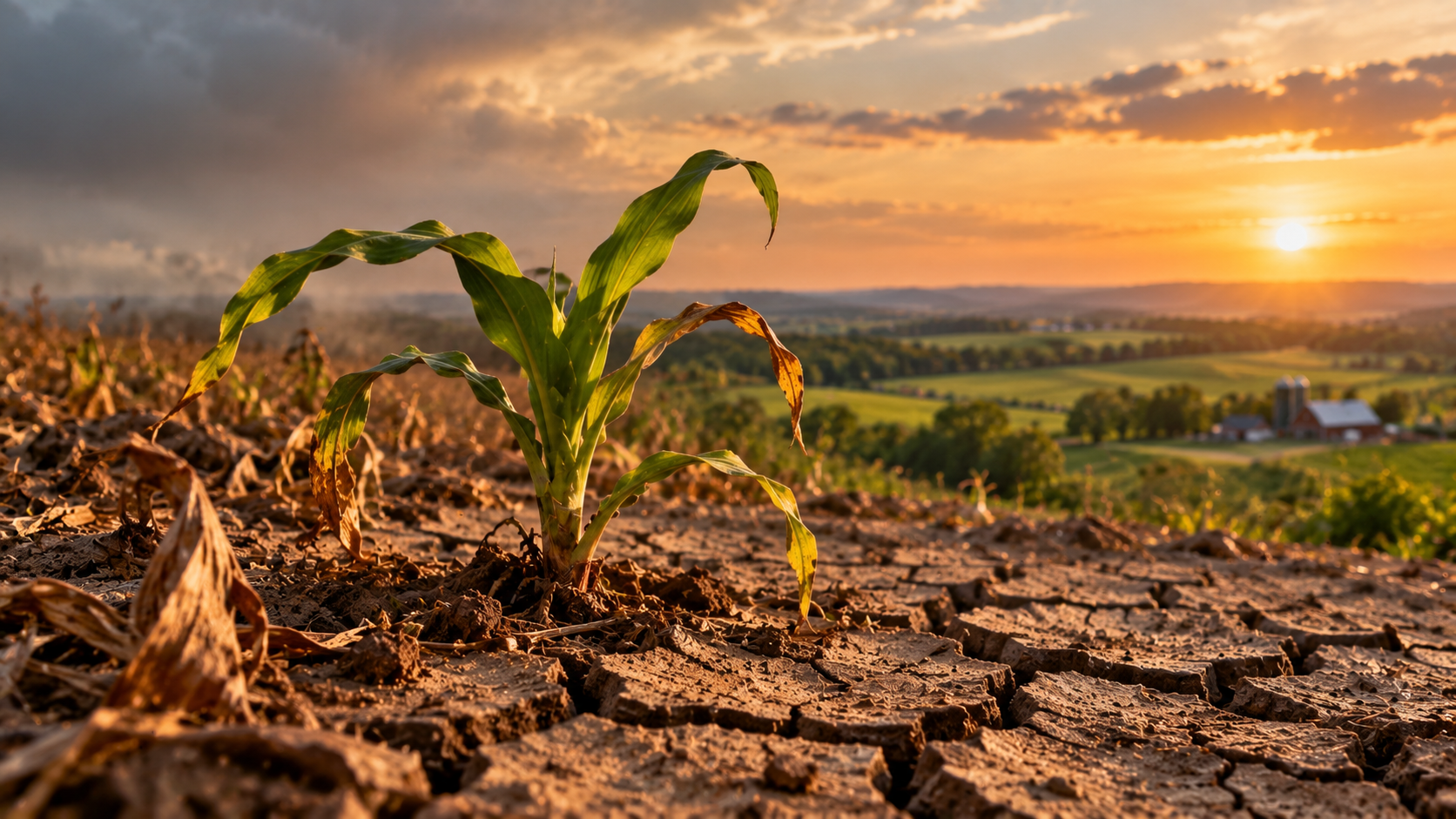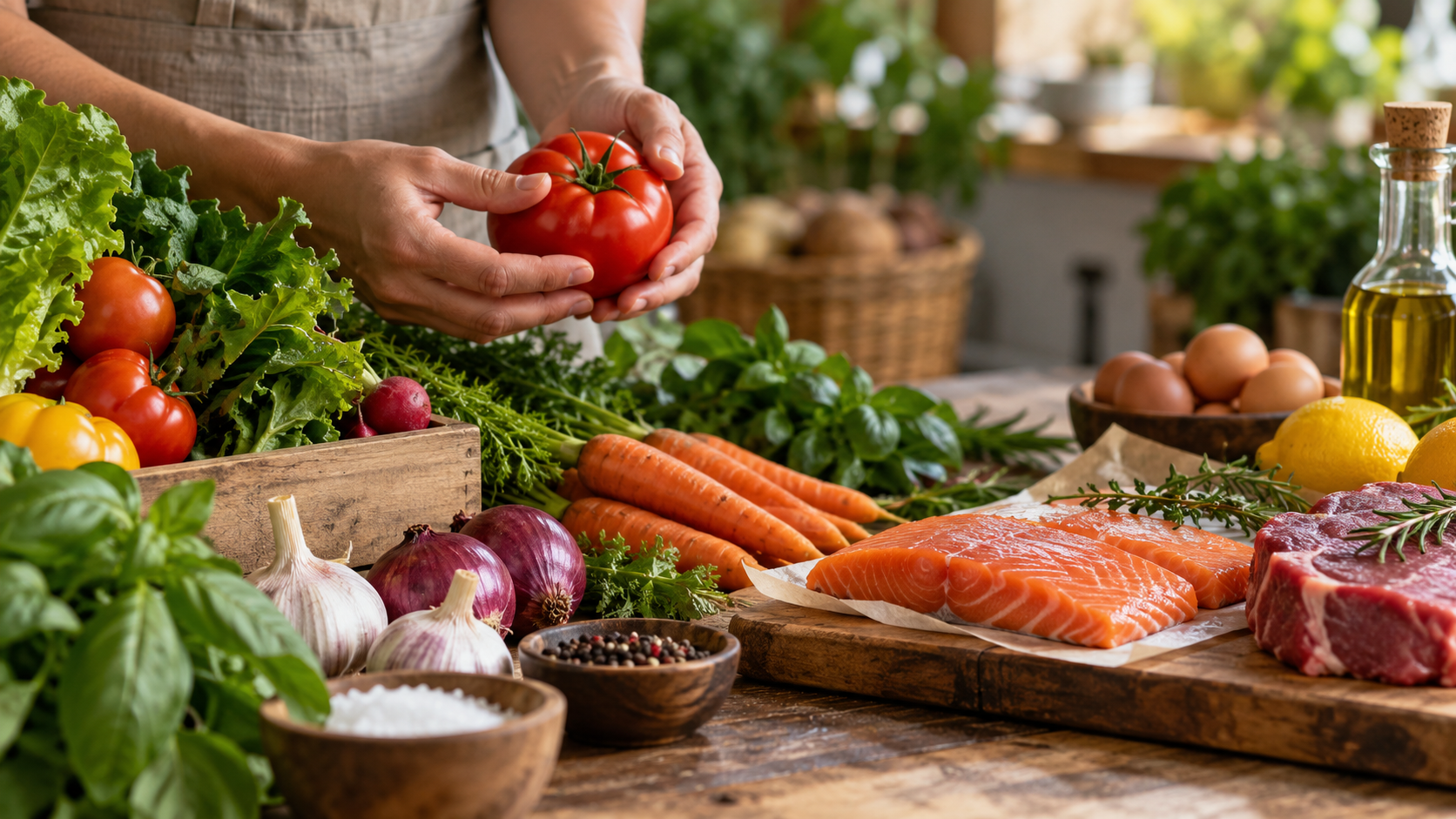
Food traditions are rarely as fixed or as local as they seem. From ancient agriculture and preservation to global trade, migration, and the Columbian Exchange, the foods on our tables carry stories of movement, adaptation, survival, and cultural exchange. This article explores how those journeys shaped the cuisines we know today, and why tradition has always been about more than simply keeping things the same.

A plate of spaghetti with tomato sauce seems unmistakably Italian. Potatoes appear inseparable from Irish food history, while chile peppers define dishes from Hungary to India. Yet none of these ingredients originated in the places with which they are now so closely associated.
Tomatoes, potatoes, and chile peppers all originated in the Americas. Their eventual journeys across oceans reveal one of food history’s most important lessons: cuisine is rarely fixed. It is shaped by agriculture, trade, migration, technology, conflict, and the ability of cooks to transform unfamiliar ingredients into traditions.
The familiar dinner table is therefore an unreliable map of culinary origins. Foods described today as “traditional” often represent centuries of adaptation. Understanding those journeys does not make culinary traditions less authentic. It reveals why they survived.
Before Recipes, There Was Agriculture
For most of human existence, communities obtained food through hunting, fishing, gathering, and other forms of foraging. The gradual development of agriculture thousands of years ago fundamentally changed that relationship.
Agriculture did not emerge around one crop or in one place. Different societies domesticated plants suited to their environments. Wheat and barley became important across parts of Southwest Asia, rice was domesticated in Asia, maize became foundational in the Americas, and Indigenous peoples of the Andes cultivated potatoes and numerous other crops.
These foods became more than sources of energy. They helped organize entire cuisines.
Wheat-growing societies developed breads, porridges, noodles, and eventually elaborate pastries. Rice cultures created countless preparations adapted to local varieties and cooking methods. Maize became tortillas, tamales, porridges, and beverages through sophisticated Indigenous processing techniques.
Long before restaurants or written cookbooks, geography was already determining what people cooked.
Preservation Turned Necessity Into Flavor
Modern refrigeration makes it easy to forget that preventing food from spoiling was once a constant challenge.
Communities responded through drying, salting, smoking, fermenting, pickling, and curing. These methods extended the usefulness of harvests, but something remarkable happened along the way: preservation created flavors people eventually desired for their own sake.
Fermentation provides one of the clearest examples. Microorganisms transform sugars and other compounds, changing flavor, aroma, texture, and shelf life. People learned to manage these processes long before microbiology explained what was happening.
Bread, cheese, yogurt, beer, wine, soy sauce, and countless fermented vegetables emerged from this relationship between food and microorganisms.
Smoking and curing followed a similar path. What began as practical preservation eventually became culinary craftsmanship.
Again and again, food history follows the same pattern: necessity produces a technique, the technique creates a distinctive flavor, and that flavor becomes tradition.

What appears ordinary at dinner is often the result of extraordinary journeys.
Trade Made Kitchens Global Long Before Modern Shipping
Culinary globalization did not begin with airplanes.
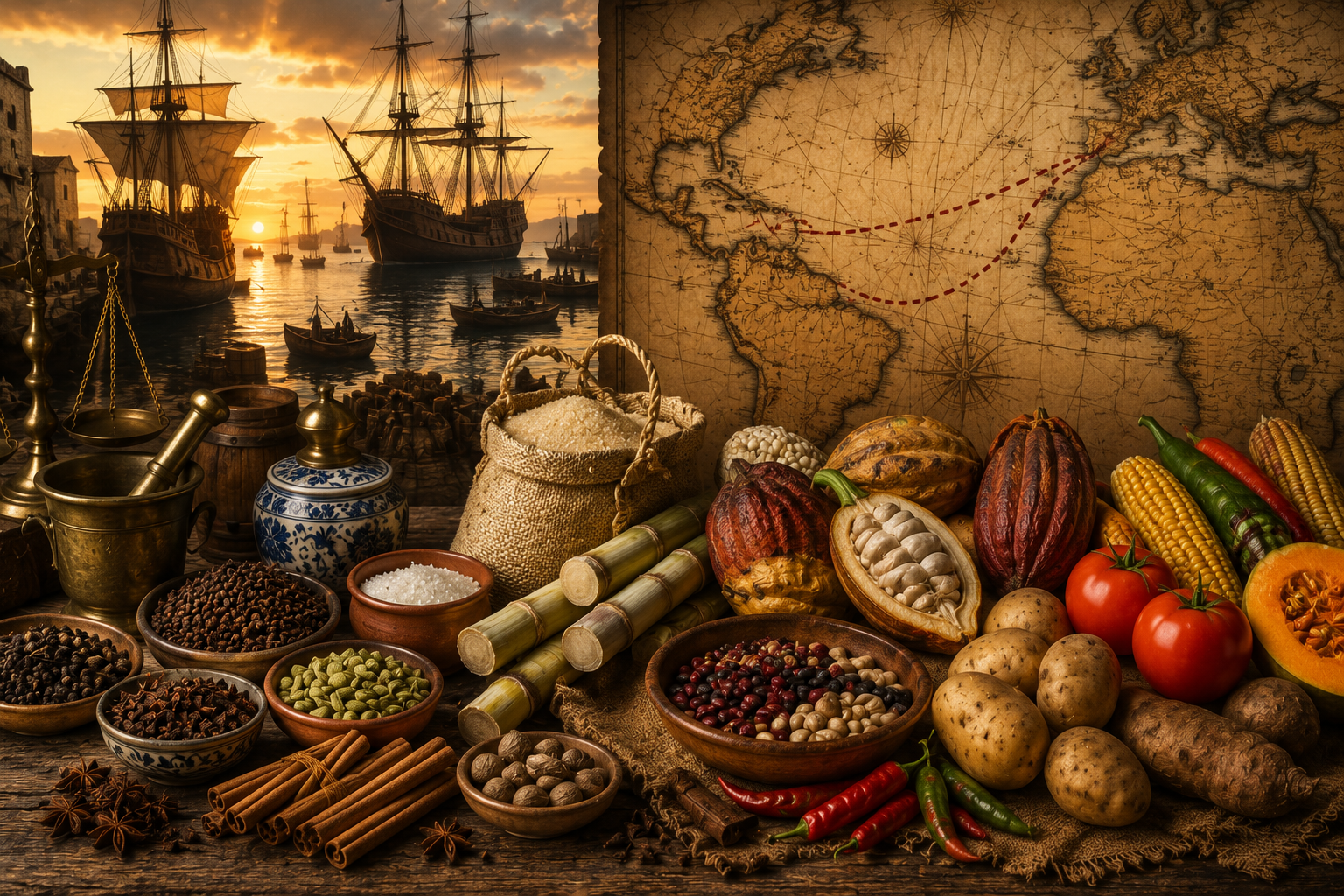
Ancient and medieval trade networks carried spices, grains, fruits, sweeteners, preserved foods, and culinary knowledge across enormous distances. Pepper, cinnamon, cloves, nutmeg, and other valuable spices connected distant kitchens to complex systems of commerce and political power.
Sugar followed an equally consequential path. Sugarcane cultivation spread from its origins in the Pacific and Southeast Asian region through Asia and the Islamic world before expanding into the Mediterranean and eventually the Americas.
As sugar became increasingly available to European consumers, its production became deeply entangled with plantation economies and enslaved labor in the Caribbean and Americas.
This history illustrates why food cannot be understood only through recipes. A seemingly ordinary ingredient may contain histories of agriculture, commerce, labor, exploitation, and cultural exchange.
The Columbian Exchange Transformed the World's Pantry
Few periods changed global eating as dramatically as the biological exchange that followed sustained contact between Europe and the Americas beginning in the late 15th century.
The movement of plants, animals, people, and diseases between the Americas and the Eastern Hemisphere became known as the Columbian Exchange.
Its culinary consequences were extraordinary.
Tomatoes, potatoes, maize, cacao, many beans, squash, and chile peppers traveled from the Americas into other parts of the world. Wheat, sugarcane, cattle, pigs, and numerous other plants and animals moved in the opposite direction.
Some now-iconic cuisines changed dramatically.
Italian cooking existed before tomatoes reached Europe. Indian cuisine existed before American chile peppers arrived in Asia. European confectionery existed before cacao became widely incorporated into its traditions.
The chile pepper demonstrates how rapidly culinary identity can evolve. Native to the Americas, Capsicum peppers spread through global trade and eventually became integral to cuisines across South and Southeast Asia, China, Korea, Africa, and parts of Europe.
Within several centuries, an American plant had become difficult to imagine absent from cuisines thousands of miles from its origins.
Historical Note
Many ingredients now regarded as essential to Old World cuisines arrived only after sustained contact with the Americas. Tomatoes in Italy, chile peppers in India, and potatoes in Ireland demonstrate how quickly an introduced ingredient can become part of cultural identity.
The Potato Became More Than Food
The potato’s journey from the Andes to Europe demonstrates how a single ingredient can influence demographics, economics, and politics.
Indigenous Andean communities cultivated potatoes for thousands of years, developing varieties suited to dramatically different elevations and conditions. Europeans encountered the crop following Spanish expansion into South America and eventually transported it across the Atlantic.
Its adoption was gradual, but the potato offered significant agricultural advantages. It could produce substantial food energy from relatively small areas and thrive in conditions unsuitable for some cereal crops.
In Ireland, much of the poorer population eventually became heavily dependent upon potatoes. That dependence created devastating vulnerability when late blight destroyed harvests beginning in the 1840s.
The resulting Great Famine was more than a crop failure. Poverty, land ownership, British governance, food distribution, and inequality profoundly influenced the disaster. Approximately one million people died, while mass emigration reshaped Ireland and communities abroad.
The potato’s history demonstrates that food security depends not simply on how much food can be produced, but on the systems controlling access to it.
Migration Carries Memory Into New Kitchens
People rarely migrate without carrying food traditions.
Recipes travel through oral instruction, religious practice, handwritten notes, and the practiced movements of cooks who know how dough should feel or when a sauce smells ready.
Yet migration almost always requires adaptation.
Familiar ingredients may be unavailable. Local equipment may differ. Economic circumstances may require substitutions. New neighbors introduce unfamiliar flavors.
These adjustments frequently create new cuisines rather than imperfect versions of old ones.
American food offers countless examples. Italian, German, Chinese, Jewish, Mexican, Caribbean, African, Eastern European, Middle Eastern, and many other communities transformed regional eating through generations of migration and adaptation.
Authenticity, viewed through history, rarely means refusing change. Often it means preserving identity while learning how to cook in a new place.
American Food History Cannot Be Separated From Enslavement
The influence of Africans and African Americans is fundamental to understanding American culinary history.
The transatlantic slave trade forcibly displaced millions of Africans, bringing people with agricultural expertise, culinary knowledge, and cultural traditions into systems of enslavement throughout the Americas.
Their knowledge profoundly influenced Southern agriculture and cooking.
Rice cultivation provides an important example. Enslaved Africans possessed valuable knowledge of rice agriculture that contributed to the enormously profitable rice economy of the Carolina Lowcountry. African culinary influences also became intertwined with Native American and European traditions across Southern foodways.
Recognizing these histories changes the meaning of familiar dishes.
Recipes can contain evidence not only of creativity and celebration but also of forced migration, survival, labor, and cultural preservation.
Technology Changed the Meaning of Seasonal Food
For most of history, geography and season placed strict boundaries on diets.
Industrialization began dismantling those limits.
Railroads moved food faster. Canning extended shelf life. Mechanical refrigeration transformed meatpacking, shipping, retailing, and eventually household food storage. Refrigerated trucks and modern cold chains later made it possible for highly perishable ingredients to travel thousands of miles.
Consumers gained extraordinary variety.
But seasonality became less visible.
A strawberry no longer necessarily signaled summer. Seafood could reach inland cities. Produce grown in another hemisphere could appear during the local winter.
Today’s renewed interest in farmers markets, seasonal menus, heirloom crops, and regional sourcing can partly be understood as an attempt to restore connections between food, season, and place that modern distribution made easier to overlook.
Tradition Has Never Meant Standing Still
Perhaps one of food history’s greatest misconceptions is the idea that authentic cuisine exists in a permanent form.
It rarely has.
Cuisines change whenever crops move, populations migrate, technologies develop, borders shift, or cooks encounter unfamiliar ideas. Even family recipes evolve as commercial ingredients replace homemade ones, appliances change cooking methods, and each generation adjusts dishes according to its own tastes.
Tradition survives not because nothing changes, but because communities decide what remains meaningful enough to carry forward.
The modern table makes those histories visible. A tomato can reveal ancient American agriculture and transatlantic exchange. Sugar can lead to stories of global commerce and enslavement. A fermented loaf can connect a contemporary bakery with techniques practiced long before anyone understood microorganisms.
What appears ordinary at dinner is often the result of extraordinary journeys.
Food has crossed oceans, survived migration, adapted to unfamiliar climates, endured scarcity, and absorbed the knowledge of countless communities. The dishes created through those journeys are not less traditional because they changed. Their ability to change is often precisely why they survived.
Every table is therefore a kind of historical archive—one written in seeds, spices, techniques, memories, and meals. Each time an old recipe is prepared again, that history does not simply repeat itself. It moves forward another generation.